WORKED EXAMPLE · HEMISPHERE, 300 MM ACROSS
Composite draping example: dome
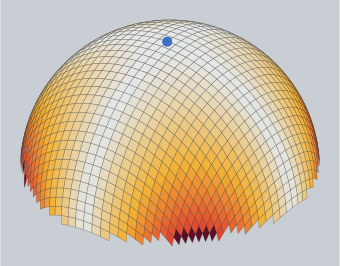
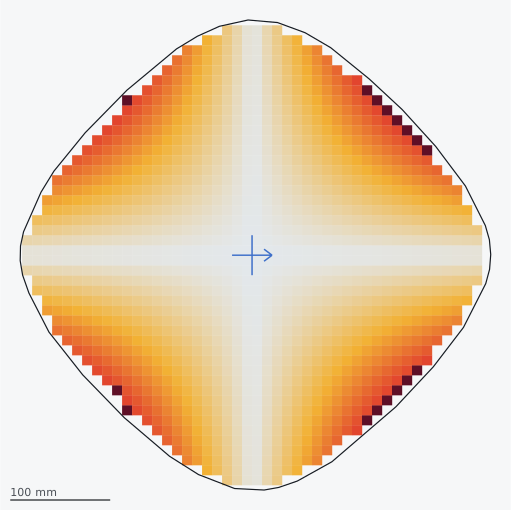
A 2D woven fabric cutting pattern generated from a 3D dome using DrapeCut's pin-jointed net draping simulation. Warp at 0°, locking angle 45° (a 2×2 twill), seed placed by the tool. The part is a hemisphere, 300 mm across.
What this part shows
A dome is the textbook case for draping simulation: positive curvature in every direction, so no flat sheet can cover it without distortion. Seeded at the crown, the two axes of the net run down the surface as great circles and stay at 90°. Between them the tows must close up to fit the shrinking circumference, so shear grows with distance from the crown and is greatest on the diagonals, where the map turns gold.
The flat cut shape shows what that shear does to the cloth: the four lobes along the axes and the pinched diagonals between them. Cut a plain disc and the diagonals will bunch and wrinkle at the rim; cut this shape and the cloth lands with the tows where the model put them. Max shear reaches 47.7° with a 45° locking angle, 16 cells past lock.
Open this example in DrapeCutChange the seed, the warp angle, the weave or the locking angle and the drape re-solves in well under a second. The DXF for an example downloads without an account.
How this page was made
The sample STL (10176 triangles) was draped by the same solver the tool runs, with these settings:
| Setting | Value |
|---|---|
| Warp direction | 0° |
| Tow pitch | 10 mm (coarse, so the net is legible; real cloth is 1–5 mm) |
| Locking angle | 45° |
| Seed | -3.3, 0, 149.9 mm (suggested by the tool) |
| Cells in the ply | 1420 |
Shear angle is pitch-independent to within the mesh resolution; cloth area and the flat size are quantised to the pitch.