WORKED EXAMPLE · DEEP BOWL, 240 MM ACROSS, 190 MM DEEP
Composite draping example: deep dish
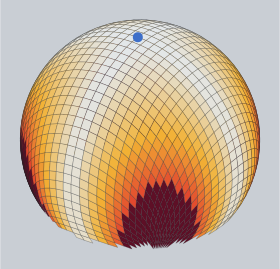
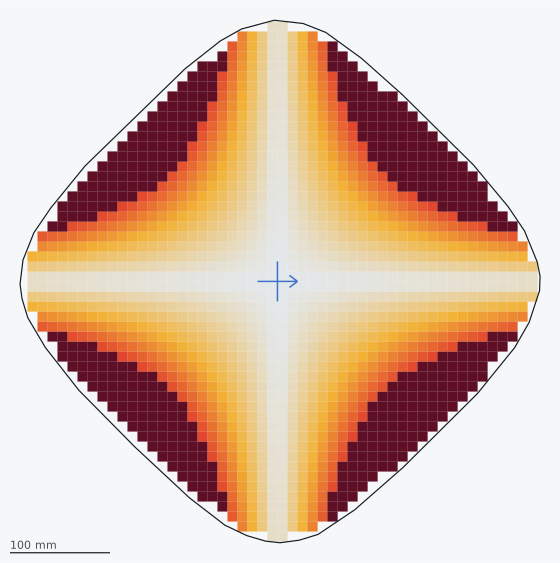
A 2D woven fabric cutting pattern generated from a 3D deep dish using DrapeCut's pin-jointed net draping simulation. Warp at 0°, locking angle 45° (a 2×2 twill), seed placed by the tool. The part is a deep bowl, 240 mm across, 190 mm deep.
What this part shows
Deeper than a hemisphere: the rim turns back inward. The dome's story repeats with the volume turned up, and the diagonals go past the 45° locking angle before the net reaches the rim. Those cells are drawn dark red on the part and in the flat pattern, and they are where a 2×2 twill will jam and buckle.
The options are the ones a laminator already knows: a satin weave that locks later, a different seed or warp direction that moves the worst shear into a region that gets trimmed off, a dart, or a second ply. The tool's multi-ply cover does the last of these automatically. Max shear 79.1°, 420 cells past lock, 25.1% of the ply.
Open this example in DrapeCutChange the seed, the warp angle, the weave or the locking angle and the drape re-solves in well under a second. The DXF for an example downloads without an account.
How this page was made
The sample STL (16032 triangles) was draped by the same solver the tool runs, with these settings:
| Setting | Value |
|---|---|
| Warp direction | 0° |
| Tow pitch | 10 mm (coarse, so the net is legible; real cloth is 1–5 mm) |
| Locking angle | 45° |
| Seed | -2.7, -0, 119.9 mm (suggested by the tool) |
| Cells in the ply | 1670 |
Shear angle is pitch-independent to within the mesh resolution; cloth area and the flat size are quantised to the pitch.