WORKED EXAMPLE · BODY PANEL, 600 MM BY 400 MM
Composite draping example: bonnet
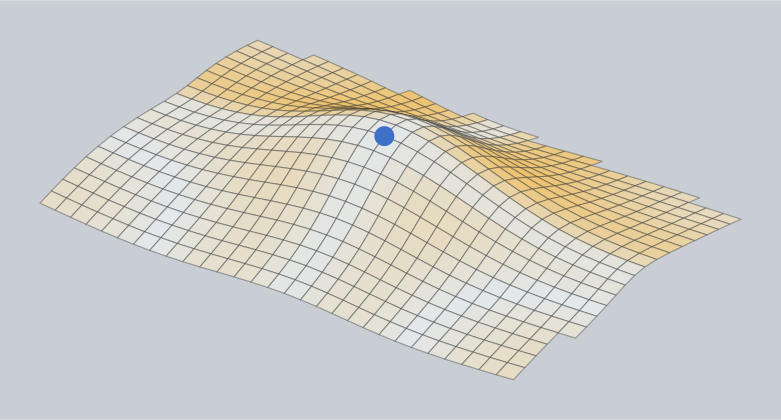
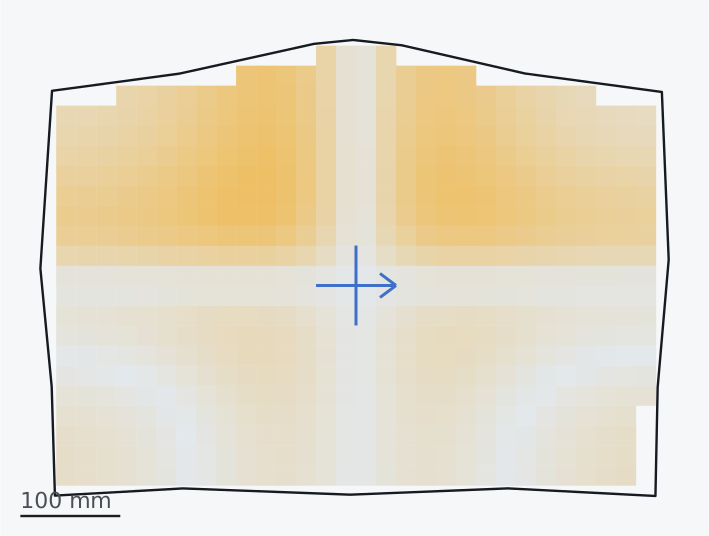
A 2D woven fabric cutting pattern generated from a 3D bonnet using DrapeCut's pin-jointed net draping simulation. Warp at 0°, locking angle 45° (a 2×2 twill), seed placed by the tool. The part is a body panel, 600 mm by 400 mm.
What this part shows
A gently crowned panel with a soft compound curve: the kind of part that looks flat enough to cut as a rectangle and then fights back at the corners. The shear is modest everywhere, but it is not zero, and a rectangle would leave the corners either short or wrinkled.
The flat pattern is a rectangle with its edges bowed, and that bow is the whole point of simulating instead of guessing. Max shear 18.3°, 0 cells past lock, part covered 100%.
Open this example in DrapeCutChange the seed, the warp angle, the weave or the locking angle and the drape re-solves in well under a second. The DXF for an example downloads without an account.
How this page was made
The sample STL (19200 triangles) was draped by the same solver the tool runs, with these settings:
| Setting | Value |
|---|---|
| Warp direction | 0° |
| Tow pitch | 20 mm (coarse, so the net is legible; real cloth is 1–5 mm) |
| Locking angle | 45° |
| Seed | 1.7, -18.3, 77.1 mm (suggested by the tool) |
| Cells in the ply | 606 |
Shear angle is pitch-independent to within the mesh resolution; cloth area and the flat size are quantised to the pitch.