WORKED EXAMPLE · CONE, 300 MM BASE, 200 MM TALL
Composite draping example: cone
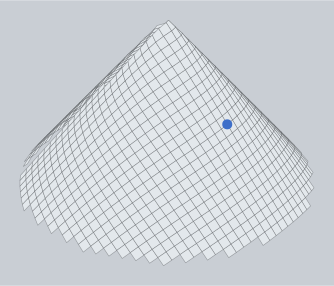
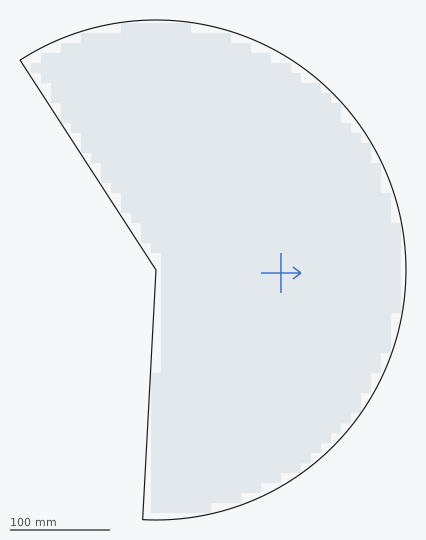
A 2D woven fabric cutting pattern generated from a 3D cone using DrapeCut's exact unfolding of a developable surface. Warp at 0°, locking angle 45° (a 2×2 twill), seed on the flank. The part is a cone, 300 mm base, 200 mm tall.
What this part shows
A cone is developable: it rolls out flat with no distortion, and the exact pattern is a sector of a circle whose angle is the base circumference over the slant length, here 360° × 150 / 250 = 216°. DrapeCut measures the angle deficit at every vertex of the mesh, finds it zero everywhere but the apex, and unfolds the surface instead of draping it: triangles laid flat one against the next from the seed outward, the seam falling where the two sides meet, opposite the seed.
The result is the sector itself, 0.118 m² of cloth for 0.118 m² of cone, with no shear anywhere and one seam to close. A net draped over a cone instead keeps going round and meets itself, which is why developable parts are recognised and handled on their own. Max shear 0°; part covered 100%.
Open this example in DrapeCutChange the seed, the warp angle, the weave or the locking angle and the drape re-solves in well under a second. The DXF for an example downloads without an account.
How this page was made
The sample STL (19043 triangles) was draped by the same solver the tool runs, with these settings:
| Setting | Value |
|---|---|
| Warp direction | 0° |
| Tow pitch | 10 mm (coarse, so the net is legible; real cloth is 1–5 mm) |
| Locking angle | 45° |
| Seed | 75, 0, 100 mm (on the flank, away from the apex) |
| Cells in the ply | 1090 |
Shear angle is pitch-independent to within the mesh resolution; cloth area and the flat size are quantised to the pitch.